Posts by Larry Harvey

December 14th, 2012  |  Filed under The Ten Principles

Why Not Implement Identity-Based Ticketing?

In the wake of 2012 ticket sales, a number of people have called for Burning Man to implement an identity-based ticketing system (non-transferable, name-on-ticket). There are valid points on both sides of this question, and it is something we have thought about and discussed at length. Putting aside the many challenges inherent in executing an ID-based ticketing system, the case may certainly be made that not-transferable tickets might better serve the needs of ticket holders if they are simply regarded as individual consumers of a service or a product. But this approach ignores the complex and interdependent social fabric of our community.

As things stand now, participants are free to bestow tickets on their friends, lovers, campmates or family members — on anyone who they believe should come to the event. This form of ticket distribution often occurs spontaneously and is independent of any authorizing agency. It is an extension of the gift giving ethic that informs our culture. Furthermore, the chief argument advanced in support of identity-based ticketing is that such a system prevents profiteering by scalpers. But we have found that little more than 1% of ticket sales can be attributed to scalping in 2012. Even in the face of scarcity, a vast majority of ticket buyers appear to have honored a social compact that values persons over profit. Burning Man is an experiment in community, and in 2013 we will continue to invest our faith in that community.

[Editor's Note: If you do sell your ticket, we ask that you sell it at face value, and if you're buying one, to find one to purchase at face value.]

April 20th, 2010  |  Filed under Metropol

Welcome to Metropol – The Story of a City


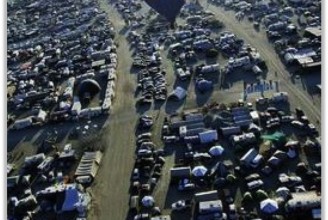
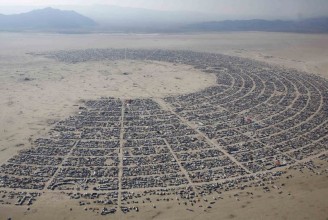
Black Rock City, 2007

Black Rock City, 2007

[This post is part of the Metropol Blog Series.]

According to my dictionary, a bohemian is “a creative person, as an artist or writer, who lives a free, unconventional life.” When bohemians gather, they tend to form ‘scenes’ — loosely knit societies that often coalesce around a meeting place; a salon, a club, a neighborhood or bar. Burning Man emerged from just this sort of boho scene in San Francisco. Such scenes have given rise to avant-garde and counter-cultural movements that have profoundly influenced the evolution of modern society. However, just as frequently, the interactive and communal aspect of these scenes has proven fragile and short-lived. Seen against this background, Burning Man may claim one novelty: it is the first bohemian scene to turn itself into a city.

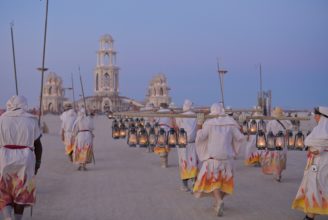
This city that seldom sleeps, a place in which the pulse of life is so distinctly urban, isn’t powered by a traffic in commodities. Although the theme camps lining Black Rock City’s streets resemble retail outlets, they function to distribute gifts created by our city’s citizens. Likewise, many of our city’s services, such as the ritual lighting of street lamps, or the informal transit system provided by art cars, are contributed by Burning Man participants as acts of self-expression. This preoccupation with aesthetics, personal initiative, communal effort and the sharing of gifts is exactly what might be expected of an urbanized Bohemia. Read more »

June 27th, 2008  |  Filed under Building BRC

The Streets of Black Rock City

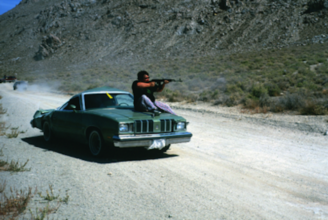
BRC Map 2008For richer and poorer, in sickness and in health, the romance of the road is a quintessential American dream. For Americans, cars have always represented independence, self-expression and the mythos of mobility. And yet, like any love affair, relationships with cars are fickle and results are mixed. The story of the American car industry, an oddly expressive combination of heavy manufacturing and show business, has always been a narrative of boom and bust. From the days of the iconic cowboy riding off into the sunset, to commuter gridlock and the rising price of gasoline, who a people are and how they get to where they’re going is a tale of destiny. This year’s street names, laid out in alphabetical order, showcase this history. It is a story about politics, economics and technology, as well as the vicissitudes of love.
Read more »